
Macrophotography. This is the second part of a post series that allows us to notice things we wouldn’t normally see with the naked eye. I’ve been waiting for the weather to settle down so that a swarm of insects and tiny creatures would return to the meadows—awakening from slumber, making their presence known again.
The first part was created on November 10, 2024, when I photographed very small objects in our kitchen. I used the Laowa 25mm 2.8 (2.5–5X Ultra Macro) lens on a 1mm macro rail, with lighting mounted on the lens and two side LEDs. The final image was composed using a focus stacking technique in Helicon Focus.
This time, I wanted to test a telephoto lens—specifically, the Tamron 150–500mm. The goal was to take single shots, without using extension tubes, additional lens filters, or extra lighting.
And so this post was born. After 4 hours of walking through the meadow, spread over 3 days, I took over 2000 photos. In the end, I selected 20 of them, 5 of which I’m presenting here, along with 3 additional images below to encourage reflection.
Each photo was lightly edited—cropped to fit the composition (I didn’t strictly follow the rule of thirds, often centering the subject), with gentle color correction, sharpening, noise reduction, and filter application using Camera RAW, Topaz Labs, and the NIK Collection.
Let me briefly describe each photo. Detailed settings are provided per individual image:
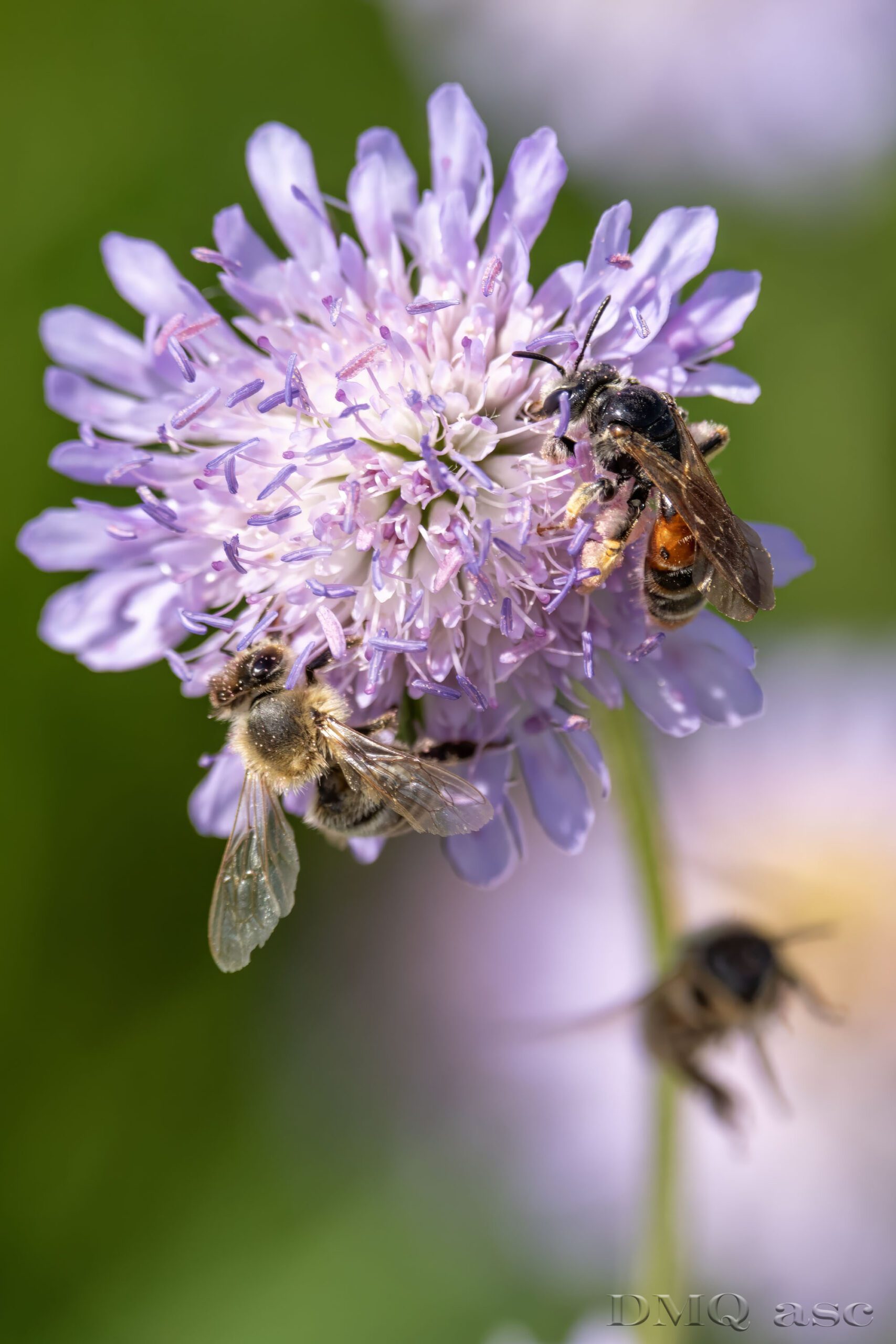
1. In this image, I captured a moment where two insects are foraging on a flower, while a third one is just about to land. I didn’t manage to frame all three bees in one nice composition, so I settled for this particular shot.
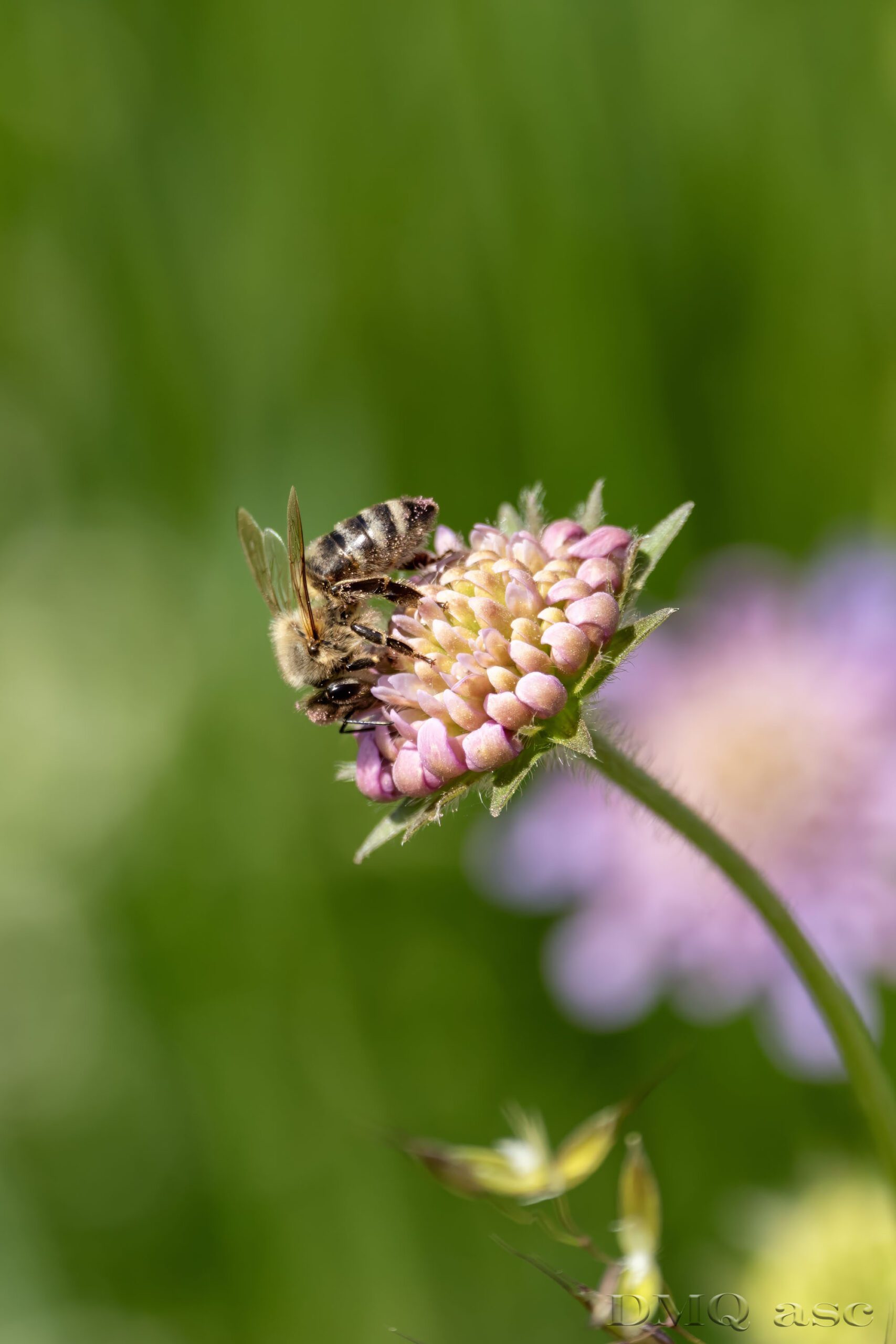
2. Here, I tried to capture a bee landing on a flower but ended up freezing the moment just after landing, when the flower was still swaying. That didn’t seem to bother the nectar-collecting insect at all.
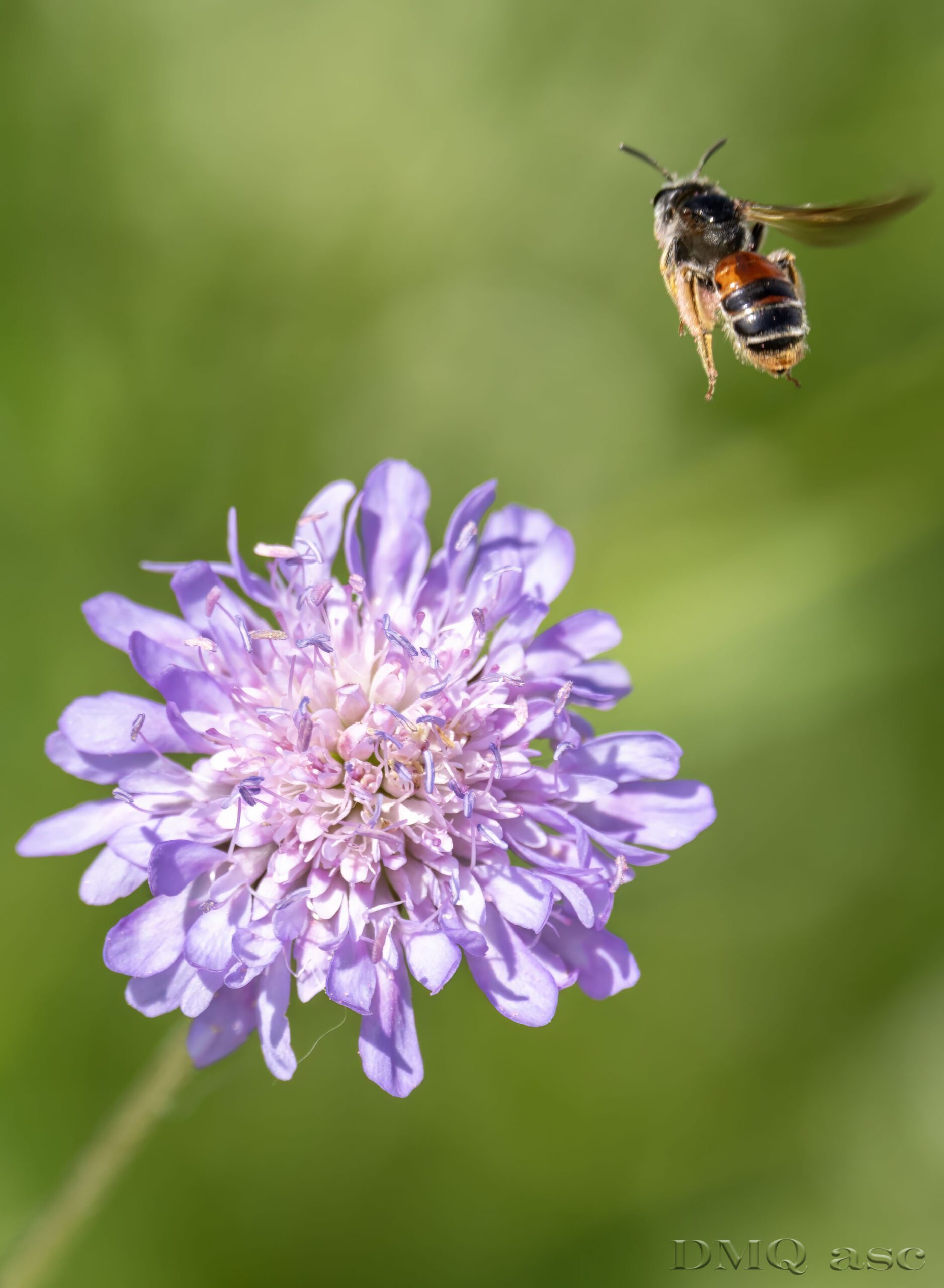
3. This is a landing shot. Capturing this precise moment is extremely challenging. Typically, when a bee is on a flower, it pauses briefly, which allows for sharp shots. Here we’re still mid-flight. Looking back, I admit this photo was more of a lucky capture than a planned one, but it worked.
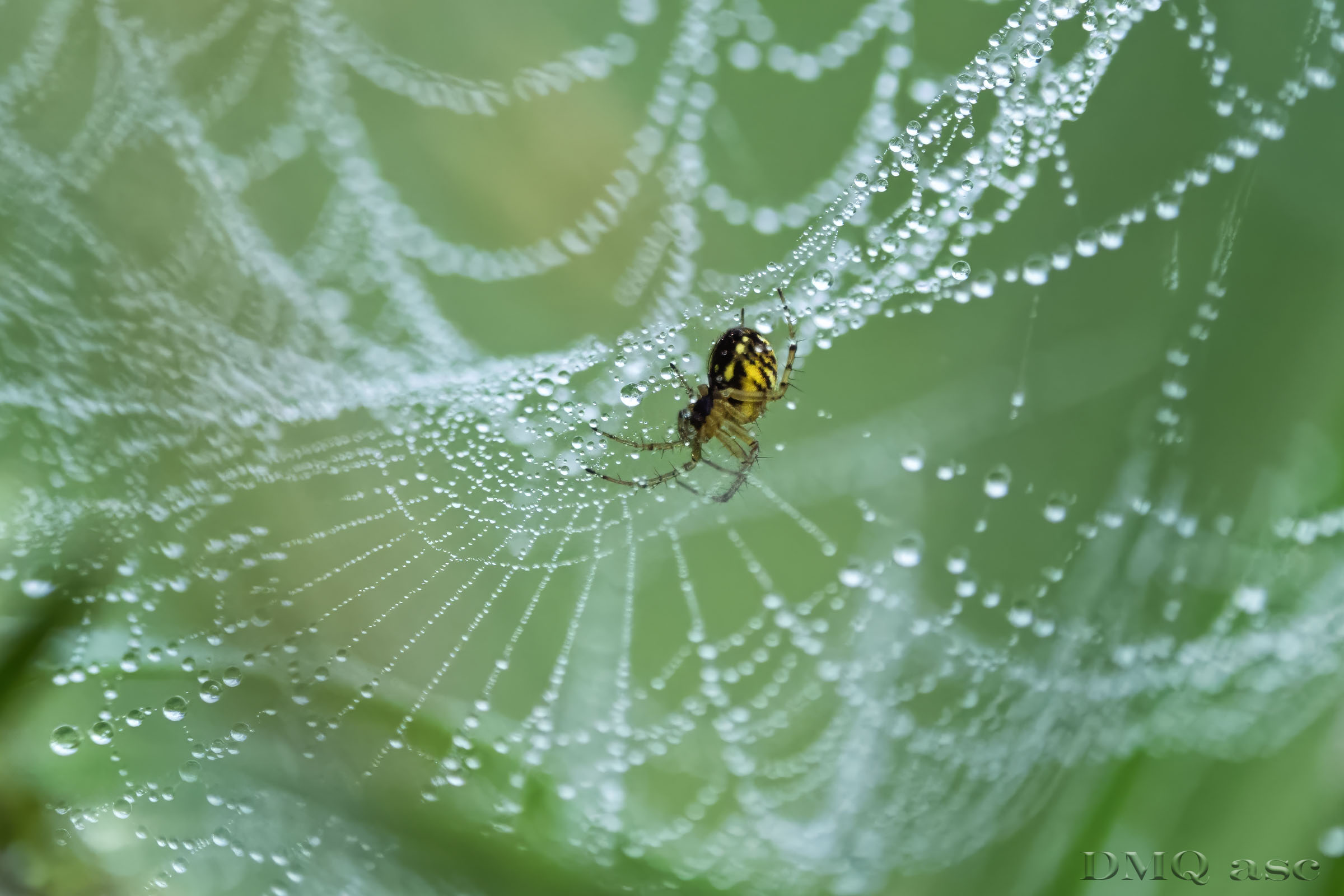
4. Taken at dawn, with dew still abundant. A spider suspended on its web, shot from below so the web disappears into a magical network of dew droplets of various sizes. The original shot included the whole web, but I cropped it tighter to emphasize the spider.
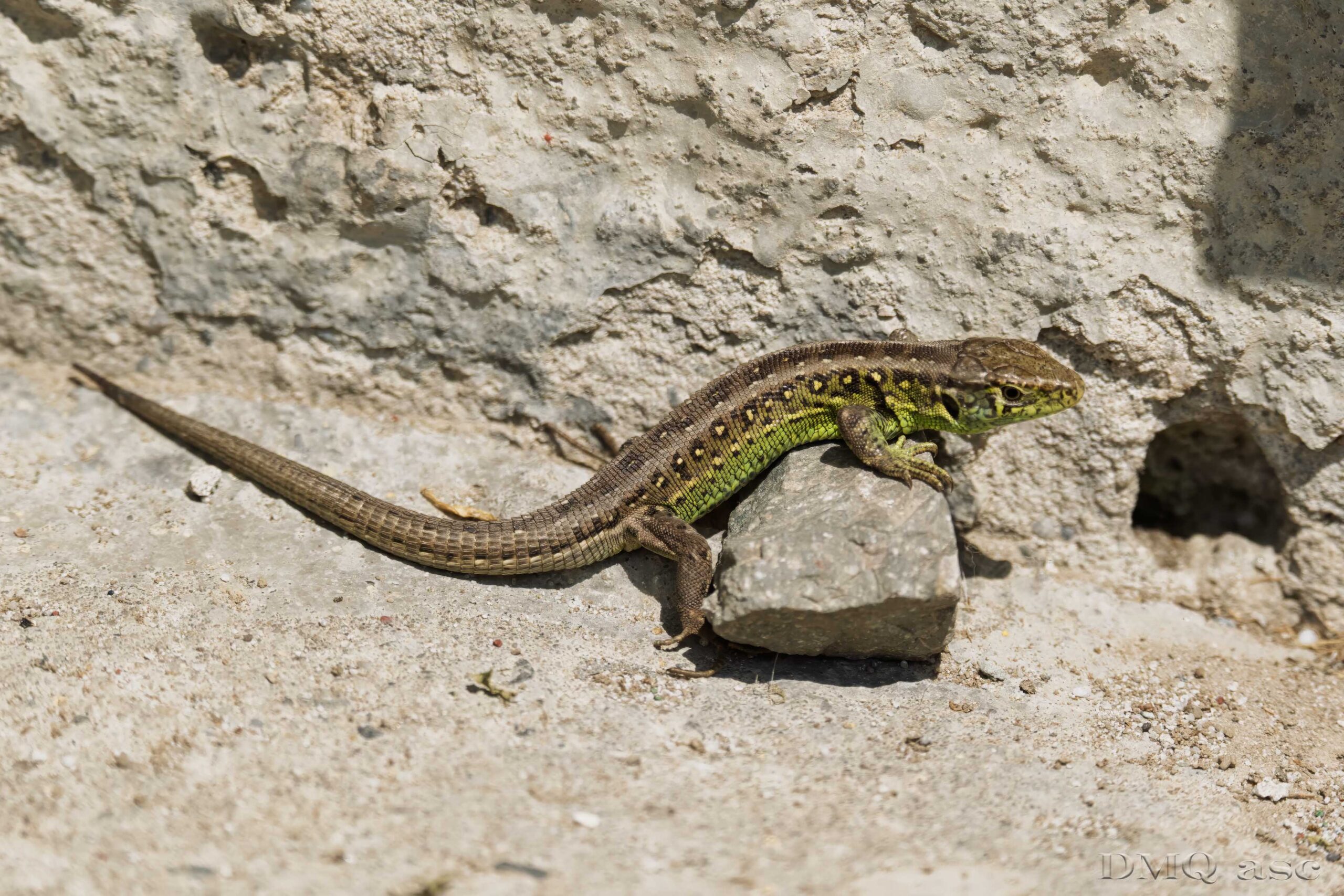
5. A lizard, encountered by complete chance. Very agile, yet it appeared in most of the best frames. It was difficult to photograph due to its constant movement.
These five images were all taken with a single press of the shutter. They show the maximum capability of this lens in these conditions. I plan to create a third installment of macro photography, returning to the Laowa lens paired with a diffused flash to build a photo stack that merges multiple depths of field into a single frame. This will allow me to significantly magnify even smaller insects. The post is planned for late autumn.
In general, I still see photography as a field of exploration. I try to combine different depths and exposures—via stacking and HDR. While it’s a fascinating hobby, it remains for me a semi-finished product within the broader graphic process.
In the section below, I’ve included 3 extra images intended to provoke reflection:
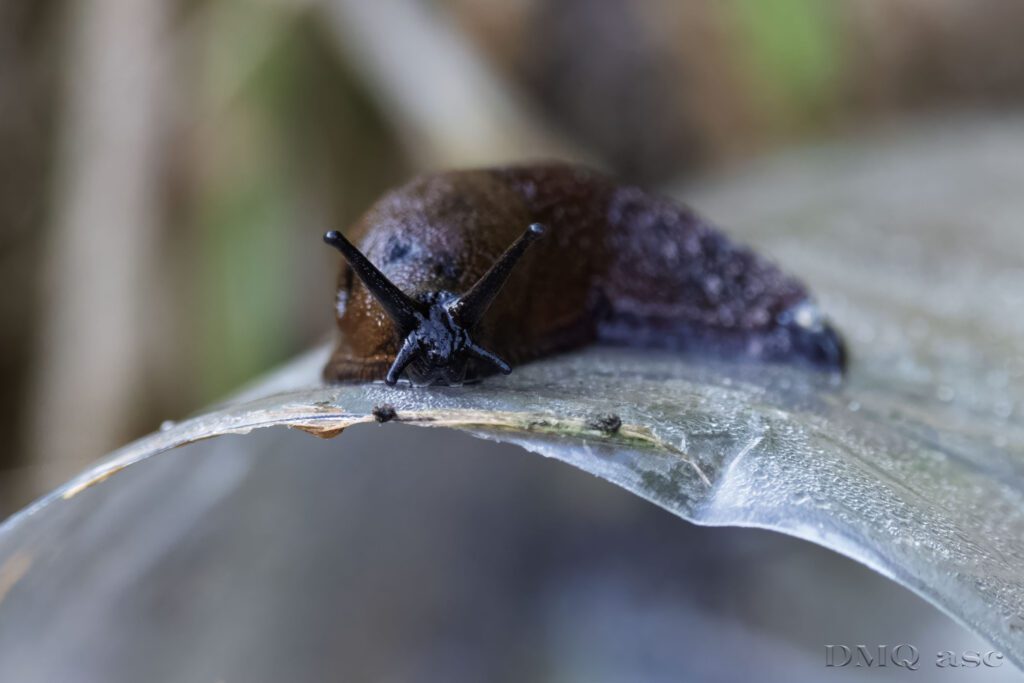
A) A snail. Nothing special at first glance—only the front is sharp. But I want to draw attention to its surroundings. The photo was taken about 800 meters from the nearest buildings and 100 meters from a bike path, yet human interference is evident. A plastic bottle has become part of the snail’s environment. A glaring example of human disruption to an ecosystem.
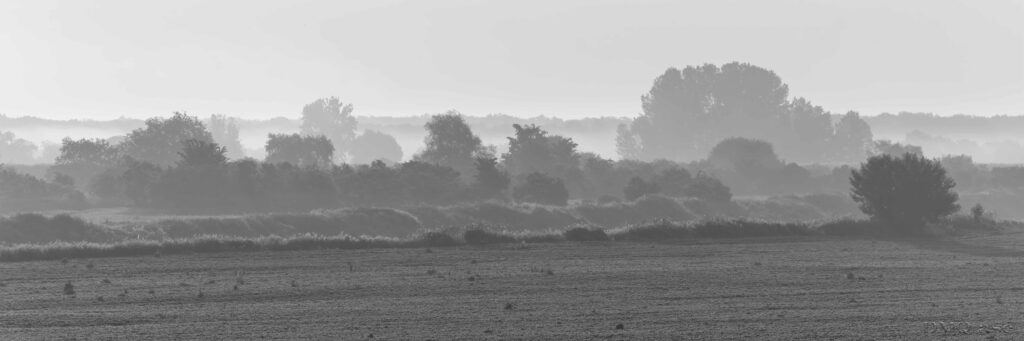
B) A landscape featuring the Vistula River, nestled between two overgrown banks near the bottom of the frame. Shot at dawn, with lingering fog. Processed into black and white, giving it a timeless feel. Yet, there’s another message hidden here: one side of the riverbank is cultivated by humans; the other is left wild, overgrown with bushes and trees. Both lie within flood embankments, and human-made vegetation affects how water overflow is managed. Eight years ago, deer and hares roamed here—now they are gone. Human activity has driven them from their natural habitat.
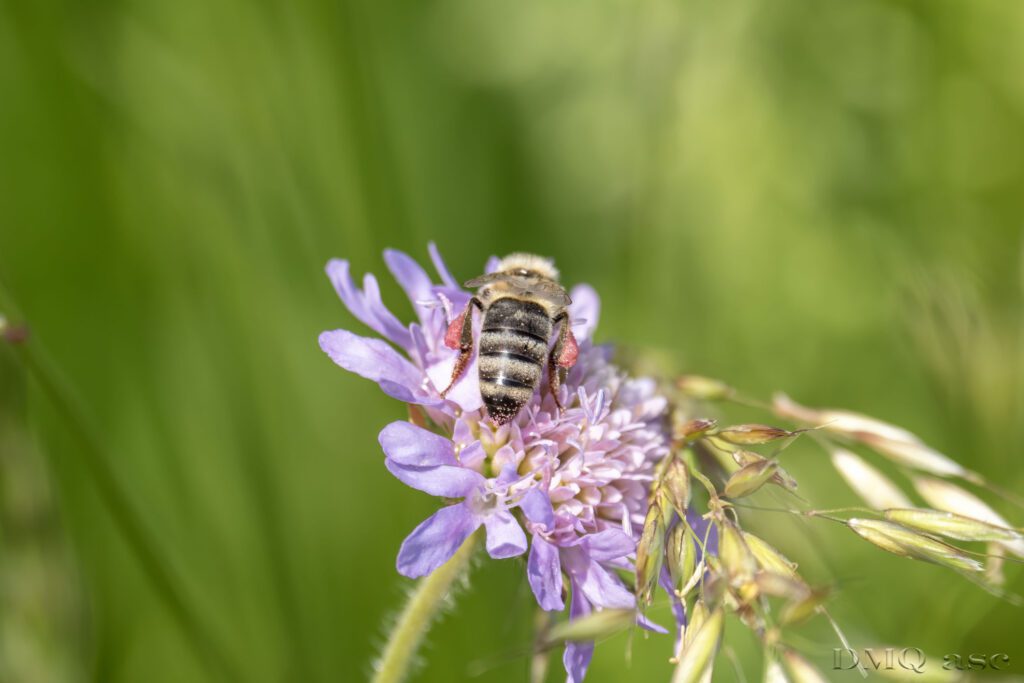
C) A bee collecting nectar and pollen. This is the only shot where I managed to capture the way it transports pollen. The insect gathers two materials: nectar, drawn into its second stomach (the “honey stomach”)—used for making honey—and pollen, which it collects by brushing against stamens. This not only aids pollination but forms part of a substance called bee bread (a mix of pollen, honey, and enzymes). The pollen is stored in “baskets” on its hind legs and carried to the hive. Honey provides carbohydrates, while bee bread offers essential proteins for larval development.
While sharing this post, I also want to highlight how artificial intelligence has progressed. Similar images can now be generated by simply writing a prompt in tools like MidJourney—specifying the exact camera, lens, zoom, and subject. The difference, however, is that these images aren’t real. The authenticity of a photo can be confirmed by its RAW file—an essential requirement in photo competitions or exhibitions.
The selected images reflect my ability to manipulate visual effects and transform people, objects, or landscapes using original material as a base. The final result is subjective and tied to a specific timeframe. We each perceive things differently and possess varied skills and temporal perspectives. These regularly published, theme-based posts are meant to systematically showcase my graphical capabilities.
Enjoy viewing!