
A 3D modeling program. It was the first software to which I devoted countless hours in pursuit of mastery. I wanted to know it inside out, to be able to use it almost with my eyes closed. After more than eight years, I achieved that goal.
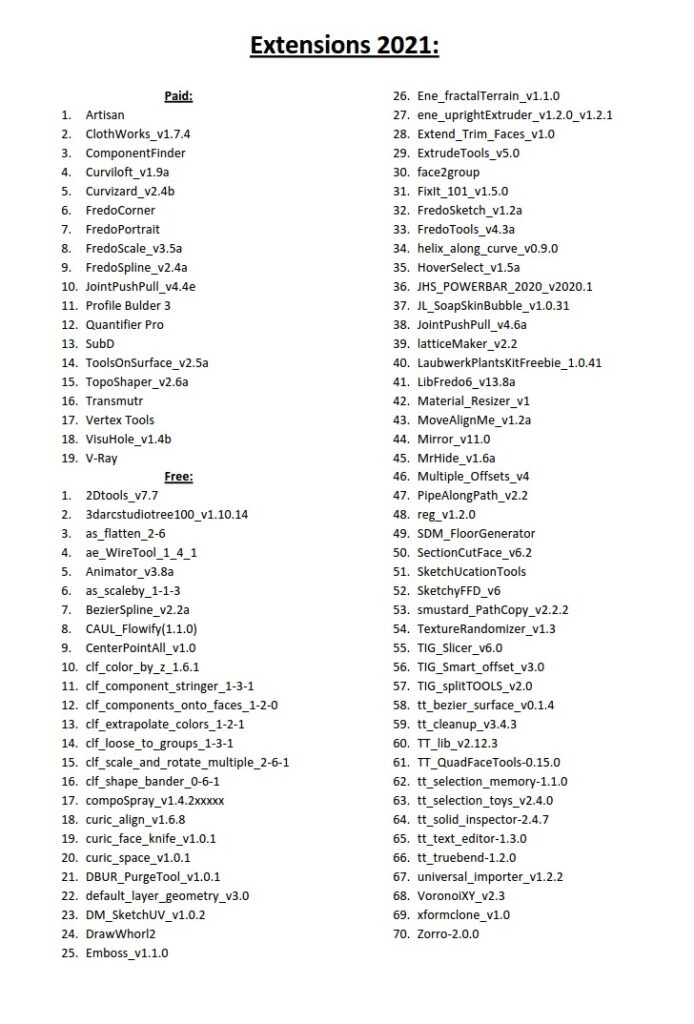
However, that goal went beyond simply learning the software itself. Over time, SketchUp became insufficient for my growing needs, I wanted to move forward, but I couldn’t. Very quickly, I began using various extensions that allowed me to push the program’s very limited boundaries. I tested over 150 SketchUp plugins, ultimately keeping a modest set of 89 extensions, some paid and most freely available.
With extensions, the program’s limits expanded significantly. I was able to create far more complex projects, freely model organic elements, record animations from them, and even produce solid-quality photorealistic video clips. Yes – SketchUp can be used to make films.
Eight years were spent mastering a program that subtly changed every year, while the entire ecosystem of extensions also had to remain compatible. I could easily have become an instructor teaching others how to use this 3D modeling software. Alongside SketchUp, another program evolved in parallel LayOut. It is a fully compatible and interactive companion designed to translate a model into flat, dimensioned sheets used for documentation. The third essential tool was V-Ray, which enabled hyper-realistic elements and photorealistic renders of scenes. One could debate at length why V-Ray was never simplified, but at the time it was an indispensable addition to SketchUp.
When I think SketchUp, I also think LayOut, it was, in my view, the most underrated and long-overlooked component of the ecosystem.
So why did SketchUp mark the end of a certain chapter in my workflow, despite outperforming other programs in terms of interface and ease of learning? Because the growth curve of its capabilities had been reduced almost to zero. Eight years meant thousands of models, thousands of hours, and a level of mastery where I not only relied on external tools but also began writing scripts myself. Eventually, it all came to an end.
When SketchUp switched to a subscription-based model, I gave up my perpetual license and decided that was enough. My organic modeling became increasingly limited, and I could not move forward. That was the moment I moved on and Blender became my primary tool. As I gradually phased out SketchUp, I slowly introduced Blender. There was no specific date or single model marking the transition. Sometimes one element was created in SketchUp, another in Blender, and later combined.
It was in Blender that I finally broke through the limitations imposed by SketchUp. I could not only create organic animations and films, but do so with far greater ease. While many people see Blender’s interface and feel like they’re sitting in an aircraft cockpit, my experience was the opposite. In SketchUp, achieving a specific result required managing a large number of extensions and remembering their functions. Extensions changed, SketchUp changed and I followed along.
Each version of SketchUp relied on a specific set of extensions, for which I assigned keyboard shortcuts to speed up work. This is why, when watching the short animation, things appear to happen without any visible mouse movement. Every tool had its place. My toolbar contained as many as six rows, because enabling too many extensions caused bugs, making smooth modeling impossible.
Below, I included a screenshot of SketchUp Pro 2021 so I could easily restore my original setup without hunting for icons across the screen. I also created a list of around 60 keyboard shortcuts. Each extension was assigned a specific version, and in some cases, usage or installation instructions were hidden within project files.
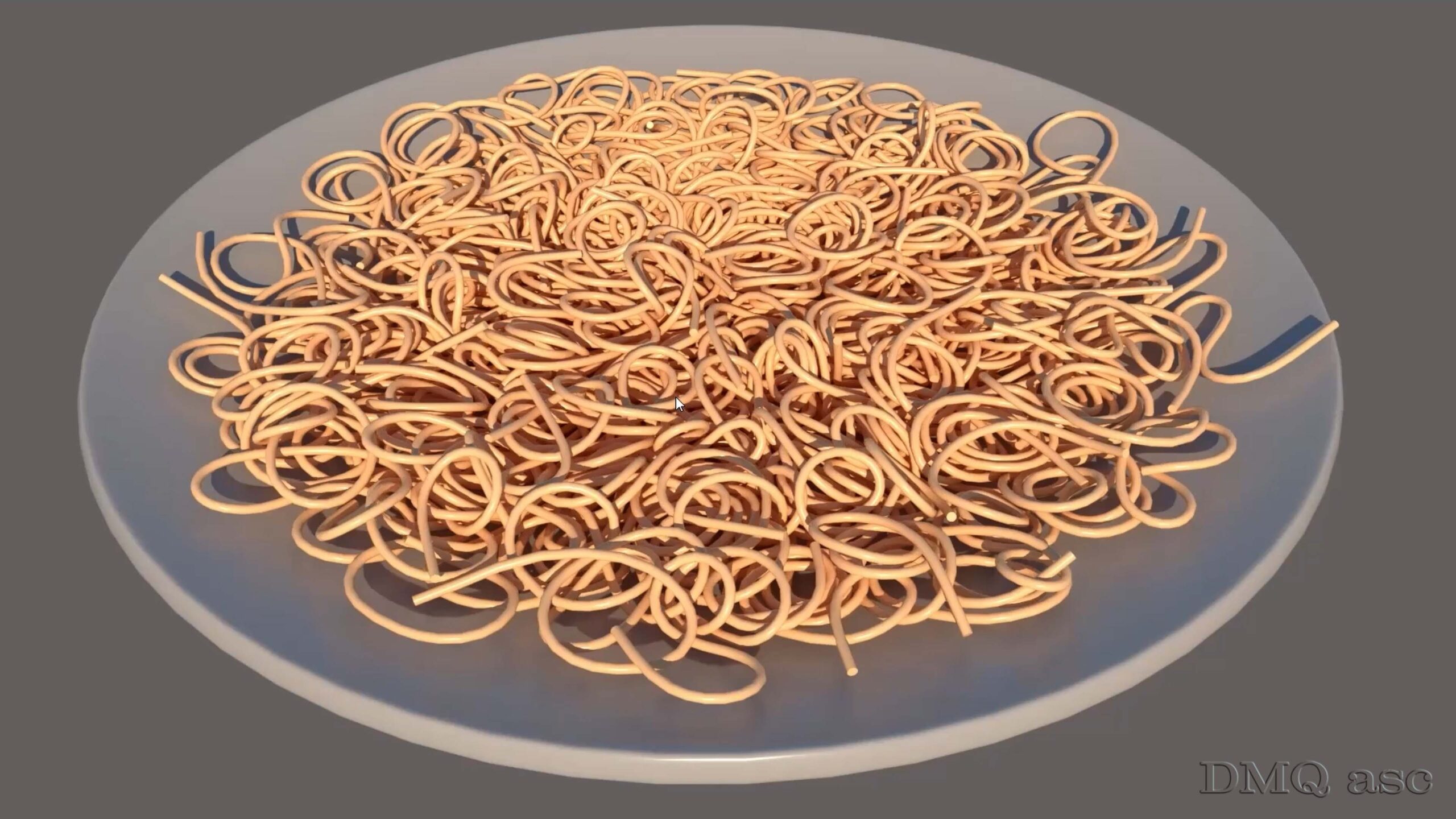
The film itself is one of many compilations I created over time. The idea was inspired by a YouTuber who modeled spaghetti, although in many cases I used different programs and settings. The spaghetti model represents the spontaneous creation of something we don’t consciously plan it simply emerges. This time was no different. The model was created in under 14 minutes and sped up four times for a more dynamic presentation.
Blender, which took over as my main tool for creating and animating 3D models, has become my primary workspace. My journey with Blender is far from complete; the software is constantly evolving, and staying up to date is limited only by time and internet access.
This post is the final memento of my time modeling in SketchUp. The memory of it will live on, I devoted an immense amount of time to it, and it allowed me to create countless commercial and non-commercial models.
The music was generated in Suno.
The selected visuals demonstrate my ability to transform and enhance the appearance of a person, object, or landscape based on original source material. The final result is subjective and tied to a specific moment in time. Each of us perceives things differently and operates within different time constraints and skill levels. The regularly published, thematically focused posts are intended to systematically gather materials that showcase graphic capabilities.
Enjoy watching!